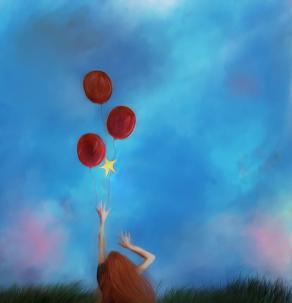
The whole moves the whole

Peintures

The whole moves the whole (truth)
No part moves the whole (illusion of agency)
No part moves another part (illusion of causation)
The whole has no history (story/narrative illusion)
It is ever refreshing, ever renewing (dance of the ONE)
The whole is alive (I am aliveness)

Happiness and Depression in general

happiness-depression

My real happiness automatically means the other person is accepted.
My depression automatically means the other person is not accepted.
This is a side effect, it is based on the overall context of that person’s life itself (much beyond the person’s will power or control available).
It is not something the person chooses as such (they do have a choice but it is not much, like it is only from the top of the iceberg portion.)

That is why universally beings gravitate to happy beings (and avoid depressed beings).
Depressed (low spirit contact) ——————————— Happy(high spirit contact)
That is because universally what is loved is ‘spirit’.
That is why children are naturally loved, because they are the closest to ‘spirit’.

So the idea of bringing up children, is for them to have minimum loss of spirit as they grow up.
It is to minimize the loss of their spirit as you introduce them to society, culture, human games, and creating an identity etc.

You want them to choose an identity from their own freedom and then help shape it better like a potter adding finesse using all of your experience and knowledge.
(One easy way to kill a child’s spirit is impose/enforce something seriously unreasonable on him (role-reversal etc.) or something totally different and out of his nature, and tell him – “Be THAT otherwise you are a shameful loser”)
Bringing up happy adults -> retention of a high amount of spirit in adulthood
Bringing up depressed adults -> loss of a lot of spirit in adulthood

In other words, if the ‘identity’ serves spirit you have a happy person, else a depressed person.

Of course depressed adults will program the children with the depression programming – consciously(top of iceberg) or unconsciously(under the iceberg).

So there are only 2 kinds of families really:
Happy families, Unhappy families – and infinite variation of these 2 themes.

Spirit I feel is not a specific kind of expression, way of being, behavior pattern, appearance etc. It can express itself in a multitude of ways.
I feel all spirit means is high electricity/high energy = high freedom
Spirit = freedom
So a person is happy when he has spirit, that is freedom.
A person is unhappy when he lacks spirit, that is being stuck.

‘Ken Wilber’ says the same:
Contact with Spirit = Happiness
Away from Spirit = Depression
That’s all there really is.

All 3 spectrums are equivalent:
Freedom ————————— Stuck
Happy——————————- Depressed
High spirit ————————- Low spirit

The final rites of letting go

letting-go-hazel-billingsley

I have relinquished almost all investments with others.
Now, I stand alone with only my parents around me.
As I let go more and more, I am falling into an energy space that has no overlap with my parents.
My parents are my final investment, and I am getting desperate in trying to connect with them in some way.
This is because if I don’t achieve some connection/structure/basis then I will fall into no-self, chaos, the dream, and emptiness.
This is scary to me, and that part of me is driving my efforts for desperate connection.
Even if it means finding fault with others(parents), and infusing urgency into the fact that they MUST solve their problems, and I will help them, and so on.
I can see through this though, and I have compassion for that part of me.

In fact I see that there is no overlap between my energy and ANYBODY else.
I see the part of me that is freaking out
That part which seeks out support/connection/bolstering for my identity.
That part is actually my identity/ego/social-self itself.
Without this bolstering one falls into the unknown, into the dream, and into emptiness, without a story, continuity, identity, or a structure.
That is how it appears.

The illusion of continuity and structure is maintained by others.
Without others, there is nothing to UPHOLD the self/ego.
Our self/ego is only a social-construct thriving on continual reinforcement.
The grief is in dropping this mega-project of the hope of securing validation of my value and worth from an other, and of contact with an other who would give me the respect of fully seeing me.
I have never received the “seeing/validation of worth and value” in any consistent way all through my life.
It has come in bits and pieces and has created so many fragmented selves.
Maybe that is what drove me towards the project of freedom, because the chaos and a lack of a stable pov was getting painful.

But now, I want to be emptied of all these dependent coagulations/structures/identities and give up everything that is not upheld inherently by existence itself.
The price to pay feels like everything, but I can also sense that nothing of true value is ever lost and all I am losing is my burdens.

Hate crimes are the tip of the iceberg

iceberg

We all have our unique points of view (from long causal chains) and it may happen that the system around you (which has its own causal chain) might get seriously hostile to you (it’s relative, like an unfolding drama).
The hostility may be a direct abuse or even through utter neglect of you or whatever you are offering.

THERE ARE 2 BROAD BRANCHES:
Blaming of self/self is responsible —————- Blaming of other/other is responsible
The 2 are not water tight compartments though, they are oscillate.
Also at a broader level the basic emotion is the same, but the center of gravity of the individual may differ widely based on the conditioning he/she received. The arrow of it points to the self or the other and accordingly has consequences.
We usually do not look into self-destructive types much and usually a lot of them stay totally invisible, however the other-destructive types usually hit the limelight.
So the phenomenon itself is much broader, we only see the tip of the iceberg which is the people who commit really prominent hate crimes against others.

INNER FEELINGS:

* So the first feelings to arise are: SADNESS/HURT which comes from THWARTED DESIRE or FAILURE.
* You then re-examine, re-evaluate, try again with a new strategy and if you either fail to break through or you realize the situation is quite hopeless from your analysis you fall into GRIEF/DEPRESSION.

So depression is the lower part of the iceberg while hurt is the tiny upper part.
Similarly grief is the lower part of the iceberg while sadness is the tiny upper part.
Sadness is the ‘pain of loss’ or ‘failure’ or ‘realization of the impossibility of achievement’ of a quick immediate goal.
Grief is the failure/loss/’impossibility…’ of the entire context/ground on which you are standing.
“FUTILITY” then arises, which is when you cannot conceive of a way out no matter how hard you try.

FEELINGS TOWARDS THE OUTER: “Which mirror the inner states in an attempt to amend”

* In the first encounter with ‘hurt/sadness’, the outer feelings could be:
– ‘ANGER'(if you think the other was unfair or you were unfair, which implies you have a firm fairness structure in you) = translates into you projecting the anger into suppressing yourself or suppressing the other – violence to self or violence to the other.
– ‘CONFUSION’ (if you cannot figure out what happened/no structure in which to understand) = Here you invest all your energy in a hyper-vigilant state of other-awareness and most of the time, you behave like a zombie when in this confusion.

* Then secondary outward feelings develop on repeated failures and pain:
– Anger turns into HOSTILITY/HATE/CONTEMPT = directed to the self or the other.
– Confusion turns into RESENTMENT/FRUSTRATION/RUMINATION = directed to the self or the other.

* Then tertiary feelings happen when the previous step once again fails with intensification of pain:
– The hostility turns into BLIND RAGE/AGGRESSION/MURDER – towards self (self mutilation, suicide) or the other (hate crimes, murder, mass killing)
– The endless frustration turns into TOTAL NIHILISM/PSYCHOSIS – here it is only to self because he/she barely has the strength and structure to affect others who may just desert him/her.

So to sum it up, I have laid out a model here. It isn’t complete but I wanted to demonstrate the complexity of these phenomena. What we call serial killings etc. are the tip of the tip of the iceberg of some of the dynamics and mechanics I have described here.

The self is endless morphing

I read this great analogy in one of the essays from Nagarjuna:

shipathorizon

“When you go to the shore and look out, you see the edge of the world, six miles out. You see a ship get too close to the edge of the world; it falls off. That’s terrible; all those people die. It happens far too often. If you go to the beach, you’ve probably seen it once or twice. You are trapped in an illusion!

So let’s say someone sticks you in the space shuttle, blasts you into orbit. You look down, you see it’s a sphere. They explain gravity. You go back to the beach. It looks just like it did before, but you no longer can see to the edge of the world. You no longer get engaged in discussions about “when you fall off the edge of the world, does it hurt immediately, or does it hurt only when you hit the bottom?” That doesn’t make any sense; you understand the illusion.

This is what the Buddha’s saying about the self. Don’t get caught in discussions about the self–does the self exist, does the self not exist. That’s like trying to decide if it hurts when you fall off the edge of the world or not. Look at the world in terms of dependently originated phenomena. That’s all that’s happening.”

This analogy was so deep, it got me thinking.
I started to see other related metaphors that demonstrate a similar point.
I’ll cover two of them below.

Mountain climbing analogy:

conquer-mountain-winter-climbing-aolne-hd-wallpaper

Suppose you decide to climb a mountain.
As you gaze at it from a distance, it stands like a large mysterious awe inspiring object in front of you.
It beckons you to explore, tread and conquer it by reaching its peak.
The peak is usually covered in snow with a foggy haze around it, which stimulates the feeling of mystery and attainment even more.
From this point of view, you resolve to reach the peak and keep walking.
Now as you walk through all the various camps, at each place you see different worlds.
Initially, there is the forest portion, then there are the grasslands, then there is the harsh hostile terrain, and then finally you hit the tall patch of snow as you race to the top.
Various realms/worlds/points of view are traversed as you move along.
Finally when you do reach the peak, doesn’t it look quite different from your conception of it which you had when you were far off on the ground?
You are seeing from a brand new point of view, but at the same time, you are still there, and this feeling of you was not different when you were on the ground, nor was it different as you passed through all the intermediate terrain.
My experience of life has been that way since my earliest memory.
At one level I am moving through stages, goals, progressing, but at another level I am still the same innocence moving from place and place.
The innocence stays untouched, but the scenery keeps morphing.

Staring at a fractal:

Mandel_zoom_08_satellite_antenna

Have you ever played a video of a fractal zoom on YouTube and just stared at it for a while?
Notice how you see a destination, and you see the fractal moving towards it, but at the same time, as the destination becomes larger and clearer, your whole view is replaced by that, and the earlier view fades.
And in this way, there is a kind of endless renewal and an endless movement at the same time.
I think this clearly illustrates the symbol ‘Ouroboros’.
It also reveals the paradox of there being ‘change’ and yet ‘no change’ at the same time.

Extroverts, Introverts and the Mystics

planet-atom

I would first like to lay out some spectrums:
Dissociation/Abstract ——— Association/Literal
Transcendence ———– Immanence

In the above 2 spectrums, we would have mystics to the far left, introverts in the middle, and extroverts to the far right.
So it might look something like this:
Abstract—|M|——|I|——|E|—-Literal
M = Mystic
I = Introvert
E = Extrovert

Our psyche projects life/emotion/feeling into the world and enlivens it.

For extroverts, I think the world objects and people are so totally mapped to their psyche that there is no distance.
They are completely tuned into this world.
So there is no abstraction, rather the world is literal and everything in it is literal.
It is the perfect projection of essence giving total reality to the world and its objects.
For example: If an extrovert says I want that specific car, then his feelings permeate the whole car.
The car literally carries his projected feelings perfectly.
So when the car moves, it is his bundle of feelings literally moving.
So similes and metaphors would not apply since there is no distance between the projection and the object.

Introverts I feel, do not attach to the objects themselves directly but do so to the mental representation of the objects.
So they are a layer removed from the literal and are slightly abstract.
So introverts may use similes, metaphors or abstract concepts more, in their communication.
They see the world with SOME distance and the mental representation in the intermediate layer they interface with the most.
The objects serve as a cue to trigger their mental representation, and then the focus is a bit more internal i.e. on the representation.

Mystics I feel are on the far left end.
They are 1 layer further removed from even the mental representation of objects.
So they inhabit a space that is highly abstract and they witness the deep activity of the symbolic deeper mind.
So their communication tends to be heavy in allegory, metaphor, analogy, and symbols.
One must contemplate on what a mystic says to truly understand it.

This makes me wonder, could we say extroverts are in the nucleus of this world (realm)? (though in conventional life we look at it in the exact opposite way i.e. seeing extroverts as the ones moving around the most)
The introverts are on the nearby electron orbits?
And the mystics are on the outermost electron orbits?
I feel the mystic/free-thinker is a free electron and enjoys a certain freedom in terms of moving around between different atoms and molecules. (which is an analogy for moving in and out of different higher context worlds with an abstract understanding that works in all those worlds)

I feel the mystic operates on the fringe. He is a messenger, a link between the known and the unknown, a link between order and chaos, and he brings back information from the other worlds and assists the evolution of others.

Hierarchy of nested contexts

many-worlds

There is no ONE physical world in our experiential reality.
This is more of an abstract idea or concept we sometimes hold in our minds.
In experiential reality however, there is no such ONE world.
Rather there are many many worlds appearing as a nested context hierarchy.
A common context is the commonality.
It conveys “We both are seeing and inhabiting the same world”.

Transcendence is to move from your current context to a higher context.
So there is infinite transcendence(s) as there are infinite nested context hierarchies.
For example: From a geographical point of view, here is a nested context hierarchy:
…Multiverse -> Visible Universe -> Super Galaxy Cluster -> Galaxy Cluster -> Milky Way Galaxy -> Solar System -> Earth -> Continent -> Country -> State -> City -> Area -> Locality -> Building -> Floor number -> Apartment number -> Your room…
The 3 dots on either end is to show that it goes on indefinitely in both directions.
Have you seen the videos on YouTube where they would start from all the way out of the universe and zoom you all the way in until you reach quarks?

Coming to the social sphere, tuning into each context creates a different world inhabited by different people.
What we call ‘our world’ is the context we inhabit.
The status game in society:
People value/e-valu-ate themselves, and then sell themselves to others at a cost.
The whole status game is that: e-valu-ation.
The 2 parties evaluate each other on looks, talents, popularity, status, attractiveness, opportunities, commonality, happiness and so on.
People link up with each other in groups of equivalent status, which forms the common context.

Each context is a world, and you instantly access the common field of information that all the other inhabitants there are holding too.
In a sense that is what unites all of you, it is the context, or the common world.
I can speak about my experience:
– When I was in school (in India), the context was the same for all students in the state known as “state board”. So everyone had the same syllabus and more or less the same school system too. So that was the common context/common world. I was in the same world as most other students in the entire state and to a large extent the entire country.
– When I joined an Engineering college, that put me in that context world and gave me access to all other engineers in the country along with the status hierarchy inside that. There were some colleges which were graded at the same level as mine, and there were some other colleges that were of graded lower, and so on.
– Later, when working in an Indian IT company, I had access to all other friends fresh out of college working in the IT industry and many of my friends were working in similar IT firms as me.
– Then when doing my Masters in US, the university was the common context and that was the new world I found myself in. I could relate up, horizontally, and down the education ladder i.e. with PhD students, other masters students, undergrads and so on. I could share context with other friends doing Masters in other universities too, and so on.
– I then took up a job at a product development company in US, and I was in the world of post-grad professionals working for US IT companies.
So to summarize, I moved through 5 worlds:
– The world of school
– The world of undergrad college
– The world of post-undergrad work
– The world of masters program at a large university
– The world of post-grad work

Now I am in a different world and I do not know what mystical new world/context awaits me.
So these contexts are OUR REAL WORLDS.
Conflict of values

conflict-of-values

This is a very vast and deep topic.
David Hawkins had a very interesting abstract picture regarding how values emerge: Context -> Meaning -> Value -> Goals.
So context creates meaning, meaning creates values, and values create goals.
I am going to narrow my analysis here, but the same could be applied to any set of conflicting values.

A conflict which I often face is between orienting myself towards “likeability” or “truth”.
When I agree with everything someone says, usually, I am not “liked” per say by that person, but I get a background of ‘acceptability’ in their life.
It is primarily a strategy to avoid conflict and rejection.
So “Conflict avoidance” and “Rejection avoidance” are some of my values.
Now, if I go out of my way to please a person by showering them with compliments, astute positive observations in a sophisticated subtle way (if you are too overt about it, it will backfire, make you look desperate and they will avoid you) or buy them gifts and basically give them a lot of loving attention, then I enter the “Likeability” territory.
So that is another value I have: “Secure Likeability points”

On the other side of the spectrum, I want to speak the truth to people and not filter anything out, whatever it may be.
It may be a combination of things I like and do not like.
OR I may want to ask for something I need from them.
This is my value of: “Truth”
Now, this is a dangerous territory.
Because, things are not equally weighed.
You may give 10 compliments and get +10 points, but if you are critical of something they are sensitive about, it may shut down the whole conversation and result in instant rejection or may greatly reduce all the goodwill accumulated.
And once they get defensive, now if you persist in what you said, the inclusion will be lost and it will become a war.
And this would go against my value of: “Inclusion”

Also, once I trigger something in the other turning them into ‘defense’/’attack’ against me, I have lost the inclusion and lost the trust in that moment.
This makes me fearful and makes me defensive too, in both cases, esp. in the attack case.
This goes against my value of: “Safety”

Always agreeing to everything the other says, is not “interesting” and neither is it “genuine”, and it also lowers the value of my agreement because I give it out to everything the other says. Also I may never express my own opinion about the issue.
So me doing that violates 4 values of: “Being interesting”, “Being genuine”, “Being valued”, “Being heard”

But I also value “Listening”, so I may not interrupt the other when they speak.
There are also some other values like: “Fair Participation”, “Fair involvement” & “Respect, i.e. both the people in conversation get to express all that they had in mind, both were equally involved in each other, both were equally heard, and both contexts were embraced.

My social life and interacting with others tends to invoke this chaotic soup of values in me which then drive my actions.
I am looking for a way to resolve this chaos.
There are 2 ways of resolving this in my understanding:
1 – Commit to certain values, polarize, and discard the rest
2 – Shift the center of gravity to a higher value structure that includes and transcends all these values.

Night sea journey

nightsea

I often ask myself the question “what do you want?”
When I look inside myself for the answer I see a huge soup of impossible contradictions.
And because I want opposite things, it becomes impossible to move forward.
It is like a boat that is still in the middle of the ocean without a rider.
And say you ask the boat “where are you going?”.
And lets say it communicates the answer to you through its movements.
What would you see?
You would just see it randomly bobbing back and forth in random directions based on the wind forces around it and the undulations in the water surface.
My internal forces, drives and will-power have become like that.

Imagine you are in a boat traversing the night sea.
Say you had a map with you and now that is lost.
The waves, winds and other external pressures determine your steering and movement, but to you it all looks meaningless.
Everything is equally relevant, meaningful, and meaningless simultaneously.
My internal psyche feels like that.
This state of my psyche gets projected to the external world I inhabit too.
The world is only a prop for the movie that you project on it from your psyche.
This is a very strange, liminal, and limbo-like peculiar state of experience for which I have given a kind of poetic expression.
Basically it is the loss of the map.
It is being adrift and directionless.
Mirages of lands emerge at a distance, making me pursue that direction, but it is only temporary for it vanishes and it is replaced by another mirage somewhere else.

The map of reality tells you what is relevant, where to go, what to ignore, what to pursue, what to collect, and so on.
Without this map, now you do not know where to go(what direction), what is relevant or irrelevant, or what is to be pursued or let go.
You do not know what is a blessing and what is a curse, and the perception of things can flip flop too.
Your whole world views can change in a day which would reorder all your energies only for it to change again the next day and once again reorder all your energies.
So how can you make any investment if it can be voided anytime by a fundamental shift?
What can you do if your very ground and frame of reference is constantly shifting? (like undulating waters).

I don’t know if a stable map or a deeper map of reality will ever emerge again.
Will I learn a new way of living without having a map?
Will strong desires ever fill me up again? OR am I moving towards transcendent silence?
Such questions circle my mind.
But all the questions and answers in this territory are again only temporary appearances.
Every emotion arises and vanishes.
Every concern, Every doubt, Every focused area, Every meta-narrative is appearing and disappearing rapidly like a shimmer.
To say I am lost, is to imply that I believe I can be found.
But even that belief does not stay constant :).
I bob in and out of various creative potentials.

The fire of desire enlivens reality

Fire

Desire is like the ‘fire’ or the ‘internal sun in you’ that upholds reality.
It comes from within you and enlivens all that you experience as the outside world.
The physical objects in the world are only “Props” for your “Projected desires”.
That is why when desire goes dim, all of consciousness goes dim.
Even the sensory world consciousness is largely/partly maintained from the “desire to survive”.
That is why when I’m alone in a safe place, I would often become oblivious to my surroundings.
The consciousness of everything rests on DESIRE.
Without desire, you would lose consciousness.
The world is kept alive and enlivened by YOUR DESIRE.